
No Public Fairfax County Warrant List
Many counties post a wanted list. Fairfax does not, at least not on the official Sheriff, Police, Circuit Court, or General District Court pages reviewed. So there is no single search box that returns active warrants by name. This is a real limit, and it is important to know up front.
Warrant information instead surfaces in other places. A pending case in the court system may show a capias or a bench warrant in its docket. A person already in custody can be checked through the jail. A magistrate or court clerk can confirm court-related process in some situations. Use these official routes rather than guessing.
For broader court access rules, the Fairfax County public records page explains how court records and FOIA differ.
Types of Warrants in Fairfax County
Warrant is a broad word. In Virginia it covers several different court and police processes. Knowing the type tells you which office to call.
- Arrest warrant - issued by a magistrate or judge on probable cause for a criminal charge.
- Bench warrant or capias - a court order for arrest, often after a missed court date or a violation.
- Search warrant - authorizes a law enforcement search and may be sealed for a time.
- Fugitive warrant or detainer - holds a person for another jurisdiction.
- Civil warrant - a General District Court term for civil papers like a warrant in debt, not an arrest order.
That last item trips people up. A warrant in debt is a civil claim, not a criminal arrest order, even though both use the word warrant.
A capias can also issue through a probation process. If a person on supervision fails to comply or misses a required step, the court may issue a capias to bring them back. Because that order ties to the underlying case, it is the case file, not a public warrant list, that holds the detail.
What a Fairfax County Warrant Record Contains
Because Fairfax does not publish a public warrant roster, there is no standard public warrant profile to view by name. Still, when a warrant appears in a case file or is shown by a court, it generally carries a few core details. Knowing them helps you ask the right office the right question.
- Issuing court or magistrate and the date of issue.
- The person named and the charge or reason, such as failure to appear.
- The warrant type, like arrest, bench warrant, capias, or search.
- Case number tied to the underlying matter, where one exists.
- Status, which may not be visible if the warrant is sealed.
A clerk or magistrate can confirm court process tied to a case, but they will not read out a sealed or investigative warrant.
Bench Warrants and Capias
A bench warrant or capias is one of the most common warrant types people face. It often issues when a person fails to appear, violates a court order, or has a probation problem. Because it ties to an open case, it may show in that case's docket on the court systems.
If the warrant links to a missed court date, contact the issuing court's clerk and talk to a lawyer before you appear. Acting early through the right court is far better than ignoring it. The Fairfax County court dockets page explains how a capias can appear on a docket.
How to Verify a Warrant Safely
Use official sources, in order, and avoid aggregator sites. Each step points to a real office.
- Check the court case systems for a related open case and docket action.
- Contact the relevant court clerk or the magistrate about court process.
- Speak with an attorney before taking action on a suspected warrant.
- If the person may be in custody, call the ADC at 703-246-2100 and use the confinement prompts.
- Do not rely on third-party warrant websites, which are not official.
Some warrants will not show at all. A sealed warrant or a sealed indictment may not be visible until an arrest is made. That is by design and protects an active investigation.
Bond and the ADC Release Process
If a warrant leads to an arrest, the bond process begins at the jail and the magistrate. The Adult Detention Center phone tree has a prompt for bonds, release dates, and court dates. Dial 703-246-2100, press 4 for confinement, then 2.
An inmate can release funds from a jail account to a bonding company or the magistrate's office by completing and signing a release-of-funds form. Jail staff do not arrange bond for the public. The full custody and bond steps are on the Fairfax County inmate records page.
The magistrate plays a key early role. After an arrest on a warrant, the person is brought before a magistrate or judge for an initial appearance and a bail decision under Virginia procedure. The court then sets the next court date. A person who still needs to post bond will need the bond amount, the court or magistrate rules, and an eligible person or company to post it. None of this runs through a public warrant search, which is why the official jail and court channels matter so much.
Note: If you think you have an outstanding Fairfax County warrant, talk to a lawyer before you act, since the right next step depends on the charge and the court.
What Is Public and What Is Sealed
Virginia treats public records as presumed open, but warrants are a special case. The state FOIA policy sets the general open-records rule, while court-record statutes and sealing rules govern warrant visibility. The FOIA policy statement explains that baseline.
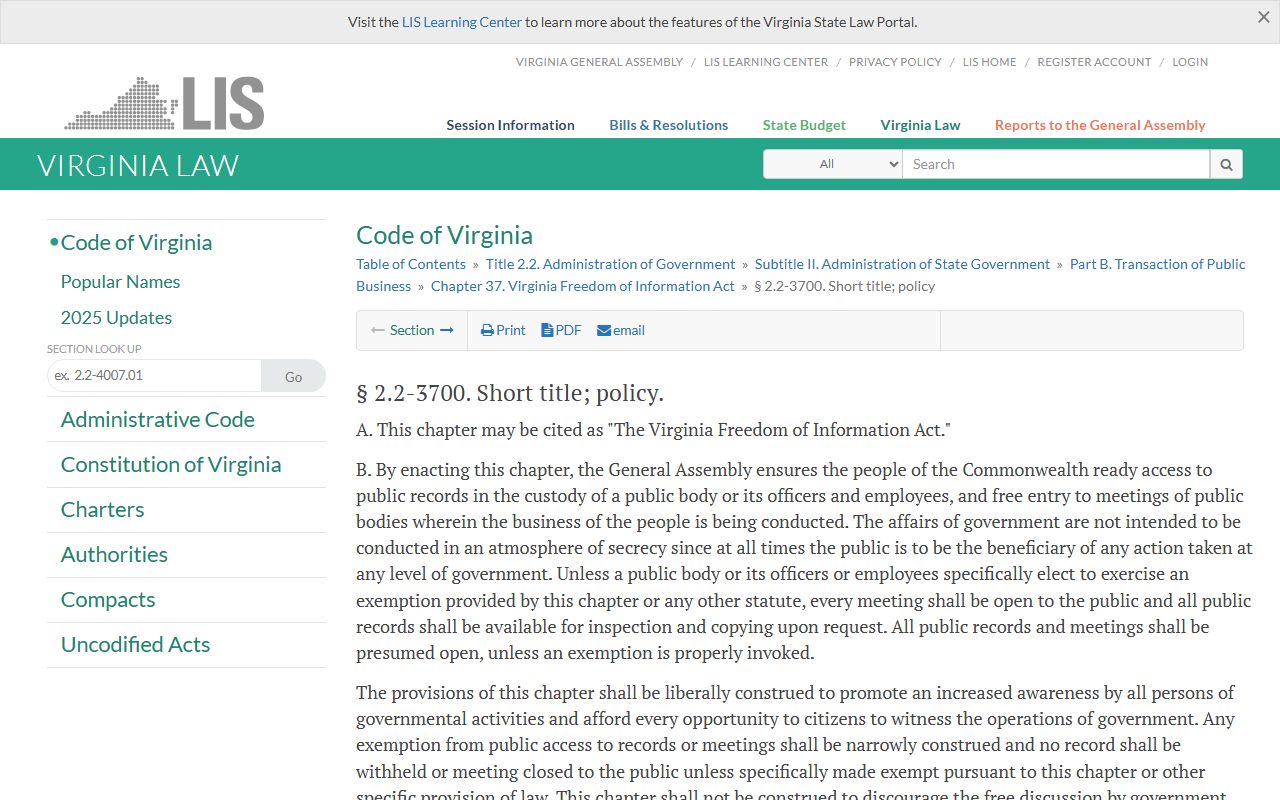
That policy is set out in Virginia Code § 2.2-3700, the FOIA policy statement.
Even so, a FOIA request is not the usual route for warrant data. The request-and-response procedures apply to ordinary public bodies, not to sealed court process.
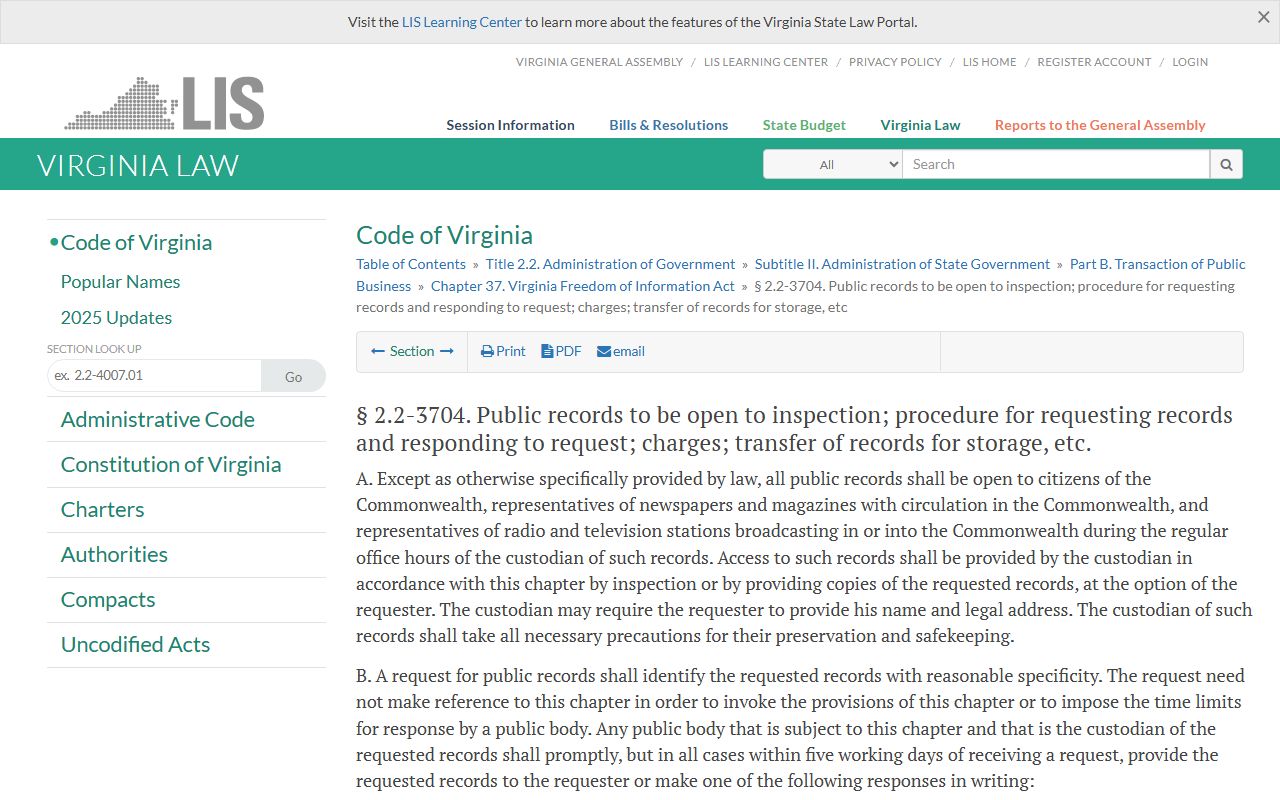
The procedures sit in Virginia Code § 2.2-3704, which sets response times and allowable charges.
Juvenile Warrant and Record Limits
Juvenile matters carry extra protection. Juvenile law-enforcement records are confidential and are not open to general public inspection except as allowed by law. That limit shapes whether any juvenile warrant or related record can be seen at all.
The confidentiality rule is shown in the state code.
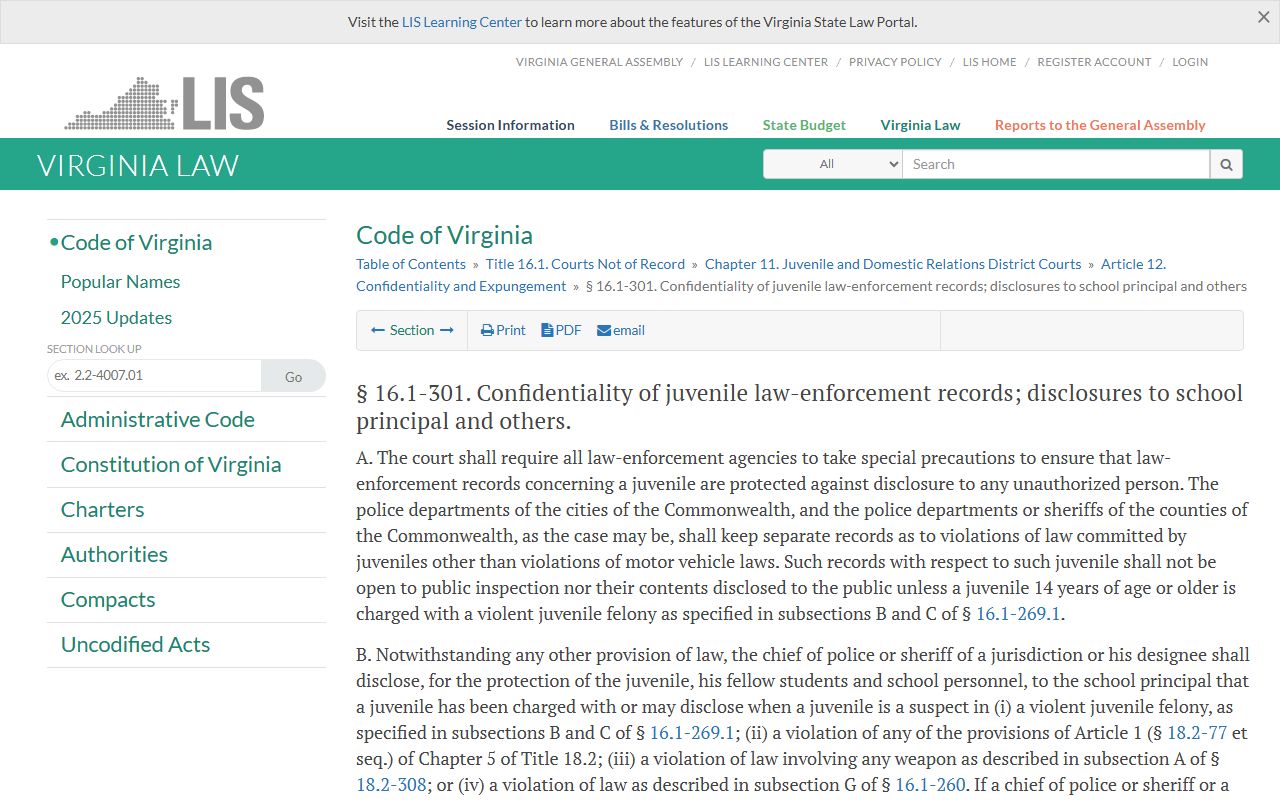
That protection is set in Virginia Code § 16.1-301, which keeps juvenile law-enforcement records confidential.
Out-of-State Warrants and Attorney Help
A warrant from another state adds steps. Out-of-state warrants may involve extradition and detainers, and the local court may not be able to clear the originating jurisdiction's warrant. A fugitive warrant can hold a person for that other state.
In almost every warrant situation, an attorney is the best guide. Counsel can confirm the warrant through proper channels, advise on turning yourself in, and protect your rights at the first appearance. A lawyer can also tell you whether a charge is one that allows release on a set bond or one that needs a hearing first. For charge and prosecution details, see the Fairfax County arrest records page, and for finding a related case file use court records.